Nara Prefecture · UNESCO World Heritage Since July 2026
Asuka: Where Japan Began
Japan's newest World Heritage site, inscribed July 2026: the megalith tombs, the painted chambers, the first temple and the bike-flat valley that holds them - one year before the crowds.
Japan's Newest World Heritage Site
Choose Your Way into the Valley
Asuka is small, flat and best by bicycle - five sections cover everything the inscription just made famous.
See It the Way Locals Do
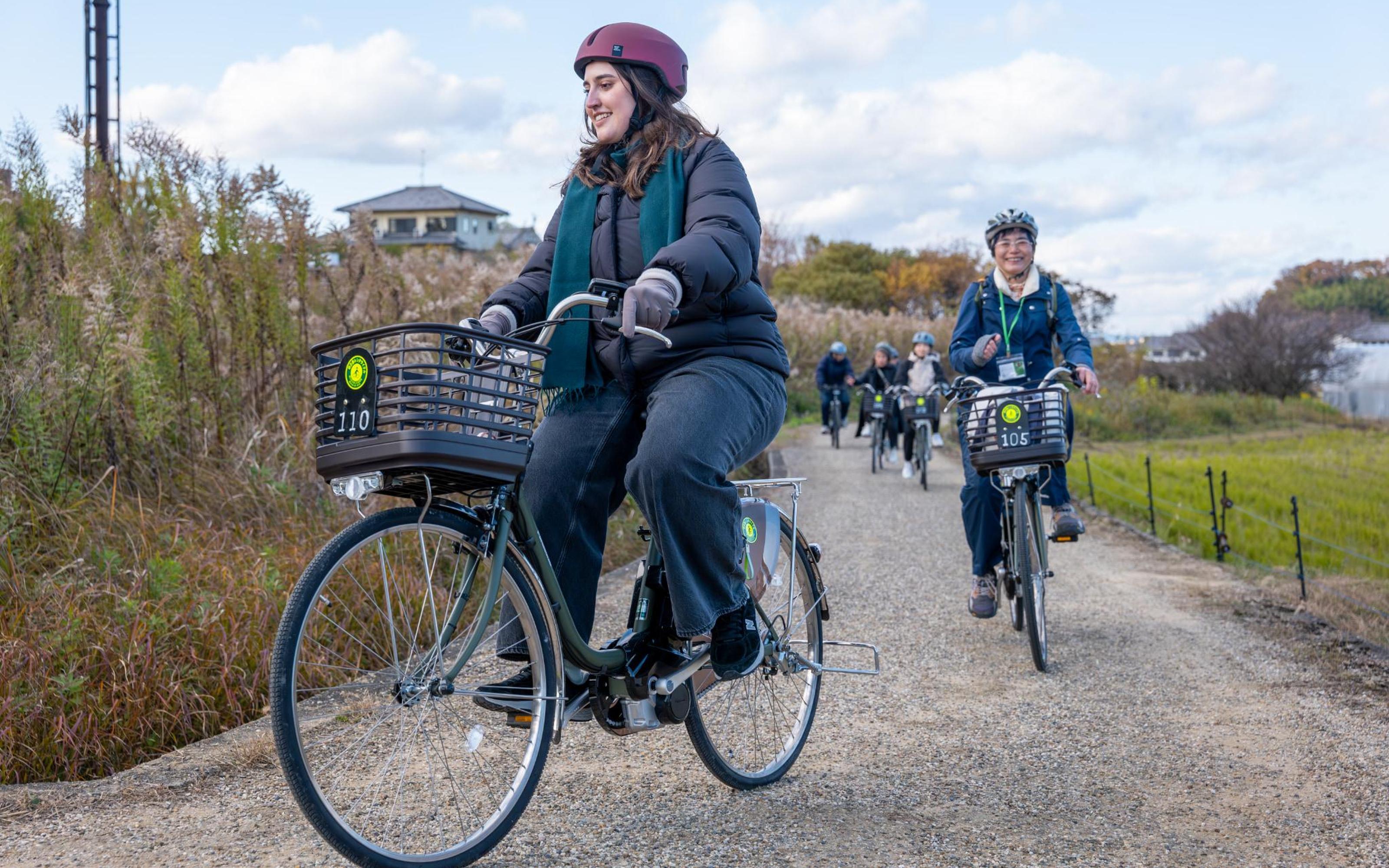
The valley is a bicycle place - flat lanes between rice terraces, tombs and temples minutes apart. Rent at the station or take the guided ride that carries the history with it.
Plan the ride →Ishibutai: The Bare Stone Chamber
A seventh-century tomb stripped of its mound, its megaliths open to the sky - the valley's signature monument and one of the inscription's 19 components.
Visit the tomb →Takamatsuzuka & Kitora
Painted burial chambers with court ladies and a star chart - the finds that rewrote Asuka archaeology, shown at preservation halls beside the mounds.
See the murals →Asuka-dera: Japan's First Temple
Founded in 596, home to the Great Buddha of Asuka - a bronze face that has watched fourteen centuries pass from the same seat. Small, humble, immense.
Meet the Buddha →From Kyoto, Osaka or Nara
Kintetsu rail to Asuka Station is the answer from every direction - the honest routings, the day-trip math, and the guided days that fold transport in.
Plan the route →Why Now
The Valley Where Japan Began, One Year Before the Crowds
On July 26, 2026, in Busan, UNESCO inscribed the Ancient Capitals of Asuka and Fujiwara - nineteen archaeological components across a quiet Nara-prefecture valley - onto the World Heritage List. Japan noticed immediately: domestic searches for the valley's tombs and palaces multiplied within weeks. The international wave always follows a season or two behind, which means this is the brief, pleasant moment when a world-class site still feels like a local secret.
What the inscription recognizes is nothing less than the birthplace of the Japanese state. Between 588 and 710, in the paddies and low hills around today's Asuka village, clan rule became imperial government: Buddhism arrived and built its first full temple, the great families raised megalithic tombs, painters sealed star charts and court ladies into burial chambers, and at Fujiwara the country laid out its first grid-planned capital before moving on to Nara. The remarkable part is what happened afterward: nothing. The capitals moved, the valley returned to farming, and fourteen centuries of rice harvests preserved what palaces elsewhere lost to cities.
Practically, that history sits in a landscape made for a bicycle: flat lanes, sites minutes apart, one unhurried day. The cycling section is where most visits should start; the logistics section gets you to the valley from Kyoto, Osaka or Nara without overthinking it. Everything here is honest about one thing: the tours are young, the English signage is catching up, and that is exactly the charm the next few seasons will spend.
Asuka Questions
The new inscription, the sites, the bikes, the trains - answered plainly.
Being the birthplace of the Japanese state - the valley where, between 588 and 710, clan rule became imperial government, Buddhism built its first full temple and the capitals that preceded Nara rose and moved on. Since July 2026 it carries UNESCO World Heritage status as the Ancient Capitals of Asuka and Fujiwara, 19 archaeological components across one cycling-flat valley.
Yes - newly. The Ancient Capitals of Asuka and Fujiwara were inscribed on the UNESCO World Heritage List on July 26, 2026, at the committee's Busan session: palace sites, Buddhist temples and mounded tombs including Ishibutai, Takamatsuzuka and Kitora. It is Japan's newest World Heritage site, and the international crowds have not yet caught up with the news.
Kintetsu rail, from either city, changing at Kashihara-jingu-mae for the two local stops to Asuka Station - about 1.25 hours from Kyoto, under an hour from Osaka-Abenobashi. From Nara it's shorter still. The full routings, and the guided days that fold transport in: getting to Asuka.
For anyone who likes their history underfoot rather than behind glass: yes, and doubly so this year - a World Heritage valley with village quiet is a combination that never lasts. The honest caveats: sites are modest in scale (this is archaeology, not palaces), English signage is still catching up, and the charm is the sum of a whole day rather than one blockbuster view.
By bicycle, almost unanimously - the valley is flat, the lanes are quiet and the sites sit minutes apart. Rental shops cluster at Asuka Station (figure roughly 1,000-1,500 yen for the day), and the guided cycling tour adds the history that the stones don't announce themselves.
One full day covers the classic loop - Ishibutai, Asuka-dera, the mural-tomb halls, the rice-terrace lanes between - at bicycle pace with lunch. Half a day forces choosing between the megalith and the murals. History-lovers pairing Asuka with the Fujiwara palace site or Tanzan Shrine will fill two.
The stretch from the late 500s to 710 when Japan's first centralized state took shape in this valley: Buddhism arrived from the continent, the Taika reforms remade government, and the era's capitals culminated in Fujiwara-kyo - Japan's first grid-planned capital - before the move to Nara in 710. The valley's tombs and temple foundations are that story in stone.
Still have questions? Email us at info@asukajapan.com